
When Things are Hard
By Gary M. Roberts

Things are hard in a relationship when resentment becomes normal.
But because addressing it feels harder than carrying it. The emotional weight of confrontation seems heavier than the burden of silence, so you choose the familiar discomfort over the unknown challenge.
That’s how resentment builds.
Not with a thunderclap, but with a quiet drizzle—slowly, steadily, until the ground is saturated and the air feels heavy.
Not through conflict—but through avoidance. It’s the moments we don’t confront, the truths we let slip by, that create a distance more profound than any heated argument.
The solution isn’t saying everything the moment you feel it. Wisdom lies in discernment—knowing when to speak and when to listen, when to pause and when to act.
A comment you let go—maybe it was a passing remark, or a joke that stung a bit too much. You brush it off for the sake of peace, convincing yourself it’s not worth mentioning.
Once or twice, that’s normal. Everyone lets things slide sometimes. No relationship is free from the occasional oversight or unintentional hurt.
But when it becomes a pattern, when things are hard, something begins to change. Those moments accumulate, shaping a narrative in your mind. Trust starts to erode, and warmth turns into caution.
What goes unspoken doesn’t disappear. Silence, rather than dissolving pain, allows it to settle like sediment on the bottom of a river—unseen, but slowly changing the current.
It settles. It lingers in the spaces between words, in the pauses during conversations, in the glances that carry more than what’s being said.
And over time, it begins to shape how you see each other. The lens through which you view your relationship becomes clouded, altering your perception and making misunderstandings more likely.
When things are hard, you become quieter. You find yourself holding back thoughts, avoiding topics, or withdrawing from moments that once felt effortless.
Less engaged. Conversations lose their spark, laughter grows more reserved, and connection starts to fade into mere coexistence.
More guarded in what you say—or don’t say. You choose your words carefully, sometimes opting for silence, fearing that honesty might cause more harm than good.
Not because you don’t care. In fact, the reason you hold back is often because you care deeply and worry that confronting the issue will create distance instead of bridge it.
But because addressing it feels harder than carrying it. The emotional weight of confrontation seems heavier than the burden of silence, so you choose the familiar discomfort over the unknown challenge.
That’s how resentment builds.
Not with a thunderclap, but with a quiet drizzle—slowly, steadily, until the ground is saturated and the air feels heavy.
Not through conflict—but through avoidance. It’s the moments we don’t confront, the truths we let slip by, that create a distance more profound than any heated argument.
The solution isn’t saying everything the moment you feel it. Wisdom lies in discernment—knowing when to speak and when to listen, when to pause and when to act.
But it is recognizing when silence is no longer helping—and choosing to address what matters before it hardens into something deeper. By inviting honest conversation and daring to voice what weighs on your heart, you can restore understanding and prevent the quiet accumulation of resentment from becoming an unmovable barrier.
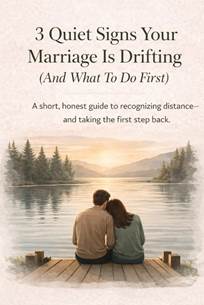
If this felt familiar, I wrote a short guide that may help you catch the drift early—
and take the first step back.
Get my free booklet—3 Quiet Signs Your Marriage Is Drifting
👉 https://garywrites.gumroad.com/l/ngxfay
For more articles on marriage and relationships
Follow The Romantic Husband
Continue Reading:
Foundation | Reconnection | Leadership At Home | When Things Are Hard | Reflection