When Something Feels Off in Your Relationship (But You Can’t Quite Put Your Finger On It)
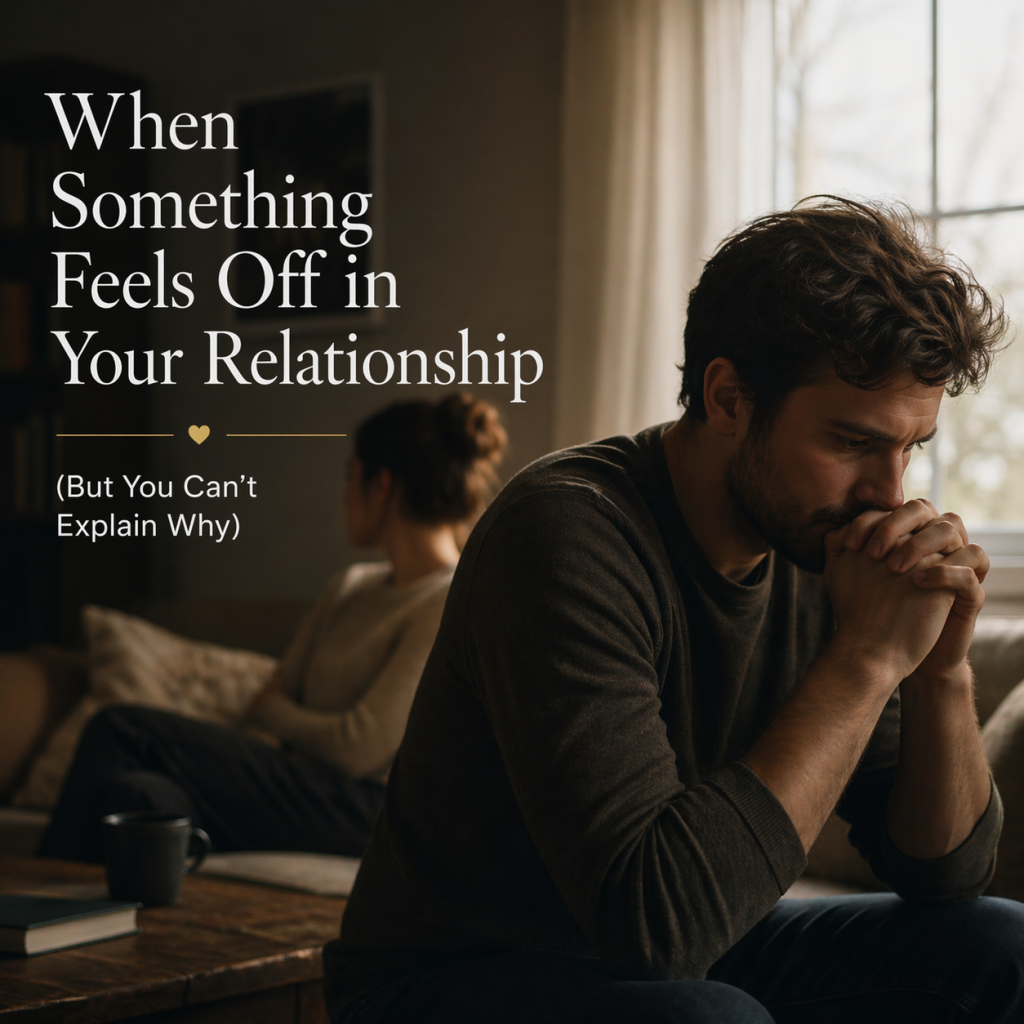
Your Relationship isn’t what it should be
When’s the last time you walked away from a conversation with your partner and just… sat with it? Not because anything dramatic happened. Not because words were thrown or doors were slammed. Just because something felt wrong and you couldn’t explain why?
You played it back in your head. Tried to find the moment.
And came up empty.
So you did what most of us do: you told yourself it wasn’t that serious. That you were probably tired. That every couple goes through rough patches. That you were making something out of nothing.
And you moved on.
Except — you didn’t. Not really.
Because that feeling? It moved with you. Into the next day. The next conversation. The next quiet car ride where neither of you said much of anything.
Not loud enough to demand you do something about it. Just loud enough to make you wonder: Is this normal?
The Shift That Sneaks Up on You
Here’s the thing nobody talks about: it’s rarely one big moment that changes a relationship.
It’s a hundred small ones.
You don’t wake up one morning and think, wow, I’ve completely changed how I show up in this relationship. It happens slowly. Gradually. So gradually you don’t even notice until one day you realize you’ve been tiptoeing around topics you used to talk about freely. That you’ve been swallowing things you used to say out loud. That you’ve been carrying more, emotionally, practically, and mentally, than feels fair.
And the wild part? You probably adjusted without even deciding to.
It just felt… easier. Smoother. Less likely to start something.
So you kept doing it. And it worked, until it became the way things are. Until the adjustment became the baseline.
Why It’s So Hard to Name
If something were clearly, obviously wrong, you’d know. You wouldn’t be here, quietly wondering.
But that’s not how most of these situations work.
Because there are still good days. Still moments where you laugh together and remember why you started. Still glimpses of the version of this relationship you fell in love with.
And those moments are real. They matter. They’re not nothing.
But they also make it incredibly hard to see clearly—because they become the reason you stay patient, the reason you give it more time, and the reason you tell yourself it’s just a phase; we’ll get through it.
The good moments and the bad ones exist in this exhausting loop, and the contrast between them is what keeps so many people stuck. Not the hard times alone. The whiplash between hard and good and hard again.
What People Actually Say Before They Admit Something’s Wrong
They don’t say “I think I’m in a toxic relationship.”
They say things like:
“I just feel worse about myself lately, and I don’t totally know why.”
“I’ve stopped bringing up certain things. It’s not worth the aftermath.”
“I genuinely feel relieved when things are quiet between us.”
“We’ve had the exact same argument four times. Nothing ever changes.”
“I keep waiting for it to go back to how it was in the beginning.”
None of those statements sound alarming on their own. Say any one of them to a friend and they’d probably shrug—relationships are hard, after all.
But together? They tell a story. And that story is worth paying attention to.
The Question That Keeps You Spinning
At some point, almost everyone in this situation asks the same thing:
Is it me?
And honestly that question makes sense. It comes from a good place. None of us are perfect partners. We all bring our own stuff into relationships. Taking responsibility is mature and healthy.
But there’s a significant difference between taking responsibility for your part and taking responsibility for everything.
If you’re the one who’s always the first to apologize. Always the one who adjusts. Always the one trying to smooth things over, manage the mood, hold the peace together with both hands —
That’s not accountability. That’s pressure. And it’s exhausting in a way that’s really hard to admit, even to yourself.
What Healthy Actually Looks Like
Healthy relationships aren’t perfect. They’re messy and complicated and two humans doing their imperfect best.
But they are steady.
In a healthy relationship, you don’t spend energy bracing yourself before conversations. You’re not doing mental math before you speak, calculating how something might land. You’re not walking on eggshells you can’t even see anymore because you’ve memorized where all of them are.
You can disagree, and it doesn’t spiral into something personal.
You can say something hard and trust that the relationship can hold it.
You feel, at the end of the day, like yourself.
That last one? That’s the one worth paying attention to most.
So What Do You Actually Do With This?
You don’t have to have an answer today. You don’t have to make any decisions tonight.
But you do owe yourself honesty about what you’re experiencing.
Start by zooming out. Stop analyzing individual moments and start looking at patterns, because patterns don’t lie the way moments can. Moments can be explained away. Patterns can’t.
Ask yourself: what keeps repeating? How do I feel, not in the highs but in the in-between spaces? Who am I becoming in this relationship versus who I was before it?
Clarity rarely arrives in one lightning-bolt moment. It accumulates. It comes from letting yourself see the full picture instead of just the parts that are easiest to look at.
One More Thing Before You Go
If you’ve been carrying this question around: is something off? I want you to know two things.
One: you’re not alone. More people are sitting with this exact feeling than would ever say so out loud.
Two: you’re not wrong for asking it. The fact that you’re asking usually means something.
I put together a short guide called “How Do I Know If I’m in a Toxic Relationship?“ — not to push you toward any particular answer, but to give you an honest framework for thinking it through. It covers the subtle signs people miss, why this stuff is so hard to recognize even when you’re living it, the patterns that keep people stuck, and how to get real clarity without rushing yourself into a decision you’re not ready to make.
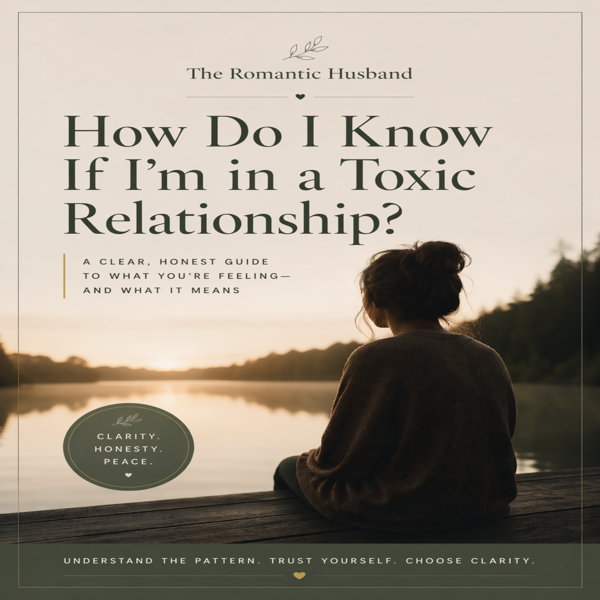
No labels. No ultimatums. Just a clearer lens.
👉 You can find it here: [https://garywrites.gumroad.com/l/swsiak]
Here’s What I’ll Leave You With
You don’t have to force an answer.
But you do have to stop pretending the question isn’t there.
Because that feeling you keep brushing off — the one that shows up after certain conversations, in certain silences, in moments when you’re alone with your own thoughts?
It’s not random noise.
It’s information.
And you deserve to actually listen to it.
If this felt familiar, I wrote a short guide that may help you catch the drift early—
and take the first step back.
Get my free booklet—3 Quiet Signs Your Marriage Is Drifting
👉 https://garywrites.gumroad.com/l/ngxfay
For more articles on marriage and relationships
Follow The Romantic Husband
Continue Reading:
Foundation | Reconnection | Leadership At Home | When Things Are Hard | Reflection