
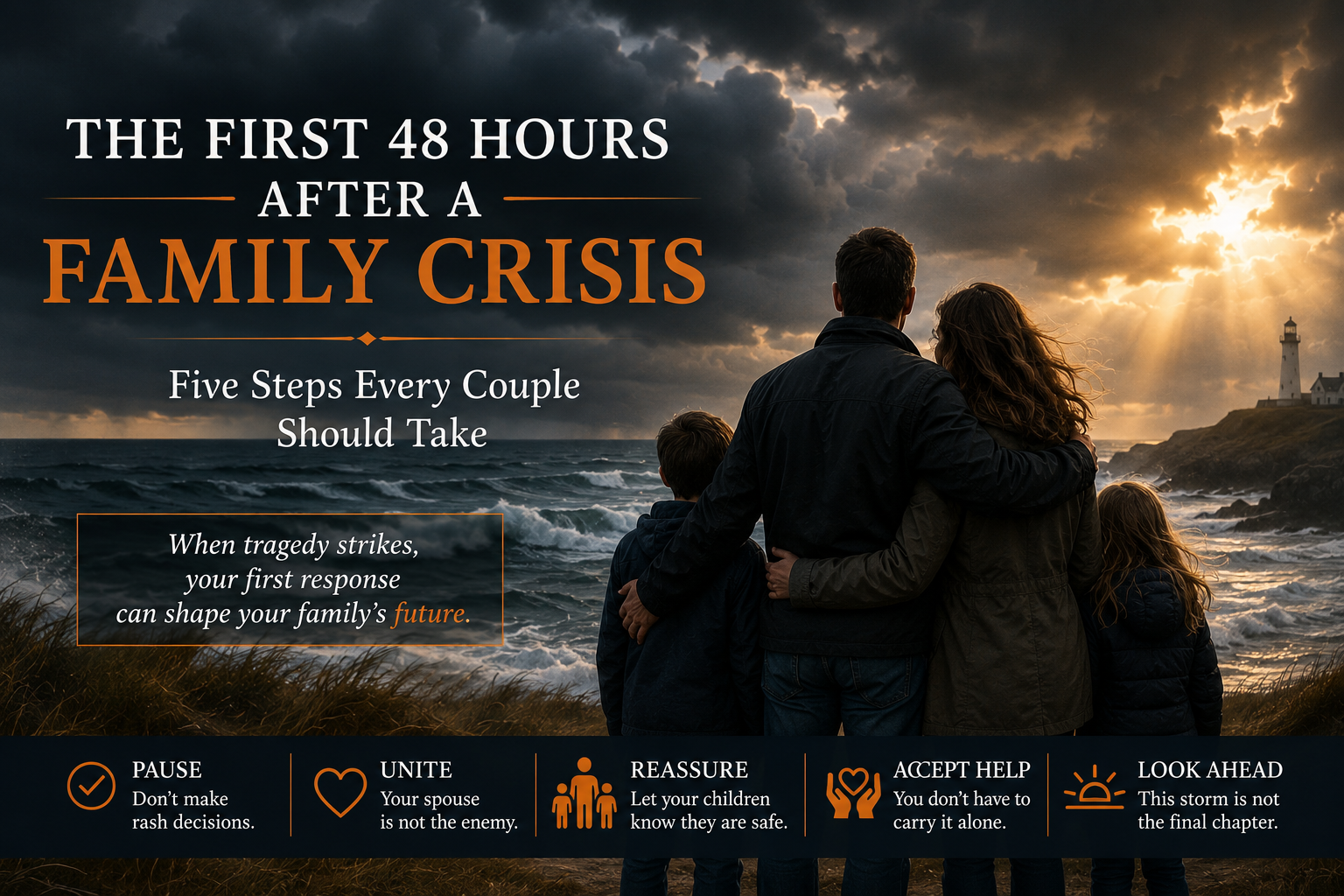
The First 48 Hours After a Family Crisis
5 Steps Every Couple Should Take
the First 48 Hours After a Family Crisis
A Christian Family Guide
One phone call. One diagnosis. One unexpected knock at the door. It is the first 48 hours that matter most.
Life has a way of changing without warning. In a matter of minutes, everything that felt normal can suddenly vanish. Whether it is the loss of a loved one, a severe medical diagnosis, a sudden financial setback, or another unexpected trauma, the first hours of a crisis are often filled with confusion, fear, and emotional exhaustion.
I spent much of my career responding to emergencies as a police officer. In law enforcement, I learned that the first moments after a crisis are rarely about having all the answers. Instead, they are about keeping people safe, preventing panic, and making wise decisions until the chaos settles and the situation becomes clearer.
I have discovered that this exact same principle applies at home.
The first forty-eight hours after a family crisis will either strengthen a marriage or begin to pull it apart. If you find your world turned upside down today, here are five foundational principles to help your family weather the storm together.
1. Pause All Major Decisions
When emotions run high, judgment suffers. Fear makes us act too quickly, anger pushes us to say things we later regret, and grief clouds logical thinking.
Unless immediate action is a matter of physical safety, give yourself and your spouse permission to pause. Take a deep breath, gather reliable information, and pray together. Many choices become significantly clearer once the initial emotional shock begins to settle.
2. Remember Your Spouse Is Not the Enemy
Stress has a malicious way of turning teammates into opponents. Everyone processes trauma differently: one spouse may want to talk through every detail, while the other completely withdraws. One may focus hyper-efficiently on logistics, while the other struggles just to hold back tears.
Different emotional reactions do not mean different levels of care or love. Remind yourself daily: the storm is the problem—not each other. Protect your relationship fiercely from friendly fire while you face the external crisis.
3. Actively Reassure Your Children
Children notice far more than adults realize. Even if they do not fully grasp the details of the situation, they instantly recognize shifts in your routine, tone of voice, and emotional energy.
You do not need to disclose every adult detail to them. However, you must explicitly give them three absolute truths:
- We love you.
- We are facing this together.
- You are safe.
These simple, repeated assurances provide vital anchors of stability when their world feels uncertain.
4. Open the Door to Accept Help
Many families try to carry heavy burdens alone out of pride or a false sense of independence. That is not strength; it is a recipe for physical and mental exhaustion.
Allow trusted friends, family members, neighbors, or your church community to step in. Let them drop off meals, watch the kids, run errands, or simply sit quietly in the room with you. Sometimes, peace and provision arrive through the hands of the people who love you.
5. Look Intentionally Beyond Today
The first hours of a crisis feel like a permanent fog, but this acute stage will not last forever. Eventually, the dust settles, the next steps become visible, and healing begins one small choice at a time.
Hope does not mean ignoring the severity of the storm. Hope is the quiet, stubborn belief that this current storm is not the final chapter of your family story.
Standing Together Through the Storm
Unexpected tragedy tests every family differently. It reveals deep fears and exposes hidden vulnerabilities. Yet, it also has the power to reveal remarkable courage, deeper faith, and a fiercely resilient relationship.
You do not have to map out the next ten years today. You simply need to take the very next faithful step together.
Storms will inevitably come. The ultimate question is not whether you will face them, but whether you will face them alone—or standing shoulder-to-shoulder.
Claim Your Free Companion Workbook
If this article resonated with you, you will find a deeper, practical roadmap in my new booklet, Standing Together in the Storm: A Practical Guide for Families Facing Life’s Unexpected Crises.
I have also created a FREE Storm Response Workbook packed with marriage discussion questions, family coping exercises, planning pages, and guided prayer prompts to help you put these five steps into immediate practice.
👉 [Download your free workbook here]
