
The Night I Realized My Kids Were Watching Us Fight
It wasn’t a loud argument. No shouting. No slammed doors. Nothing that would have made a neighbor pause at the window. Just two tired people, standing in a kitchen that had weathered too many long days, saying things sharper than they meant to. I can’t even remember what started it — bills, maybe. Schedules. Something…
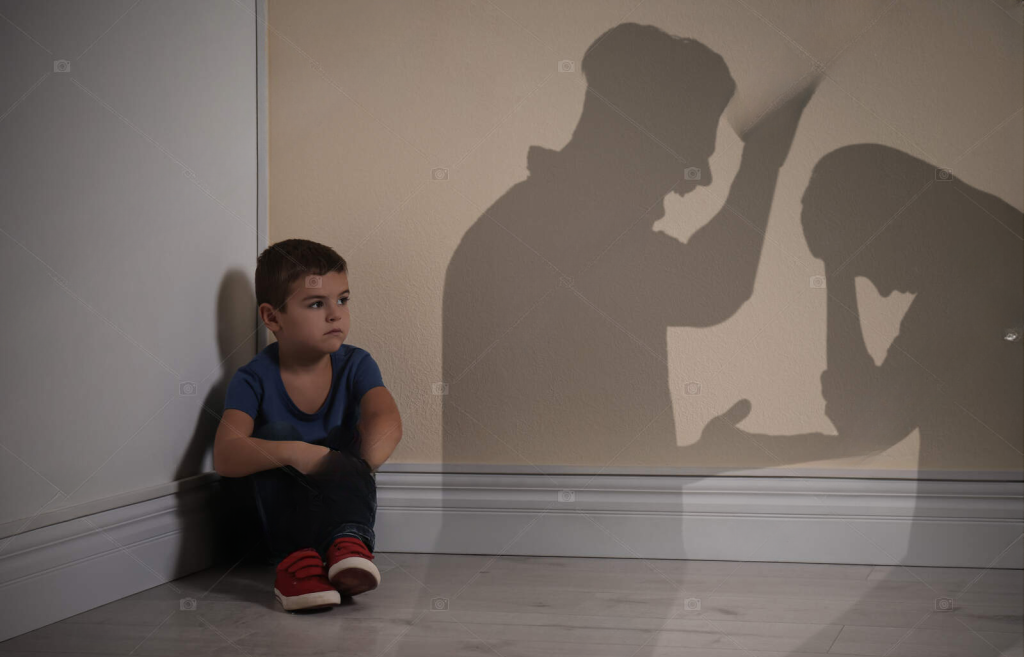
It wasn’t a loud argument. No shouting. No slammed doors. Nothing that would have made a neighbor pause at the window.
Just two tired people, standing in a kitchen that had weathered too many long days, saying things sharper than they meant to. I can’t even remember what started it — bills, maybe. Schedules. Something small that had been quietly gathering weight for weeks. The kind of argument couples wave away, telling themselves it doesn’t really count.
I said something I shouldn’t have. Not cruel. Not explosive. Just dismissive — the kind of sentence that lands harder than it sounds, that arrives wrapped in calm and still manages to cut.
Then came the silence. The kind that doesn’t empty a room so much as fill it — pressing against the walls, making everything feel slightly wrong.
That’s when I noticed the hallway.
He wasn’t supposed to be there. Standing halfway between his bedroom and the kitchen, absolutely still. Not crying. Not frightened, exactly. Just watching. Trying to make sense of something he didn’t yet have language for.
I don’t know how long he’d been there. Long enough. Long enough to absorb what I hadn’t meant for him to see.
We stopped talking immediately. Not because anything had been resolved — but because in an instant, the argument ceased to belong only to us. It had an audience. And worse than that, it had already left a mark.
“Children don’t need to understand the words to feel what’s happening in a room. They read tone. They read posture. They feel distance before they can define it.”
In that moment, standing in the kitchen with the silence still ringing, I understood something I had been quietly avoiding: our children were learning what marriage looks like from us. Not from what we said about it on good days — but from how we inhabited it when it was difficult. When patience wore thin. When we were tired and ungracious and very, very human.
· · ·
That night changed something. Not all at once. Not cleanly or perfectly. But it drew a line I could no longer pretend wasn’t there.
We didn’t decide to stop disagreeing — that would have been both impossible and dishonest. Conflict is woven into every close relationship; the goal isn’t to eliminate it but to carry it with care. What we decided was to start protecting our children from the worst of its weight. To be more intentional about when and how our tensions spilled into the shared spaces of our home.
Sometimes that meant pausing mid-conversation, mid-sentence even, and choosing silence over momentum. Sometimes it meant saying, we’ll talk about this later — and meaning it. Sometimes it meant walking away from the kitchen entirely, not to avoid the issue, but to protect the moment from becoming something our children would carry into adulthood.
And just as important as what we stopped doing in front of them was what we started doing instead: letting them see us come back together. Letting them hear calm voices after tension. Letting them witness resolution — not just rupture.
“It’s not the existence of conflict that shapes a child’s understanding of love. It’s how that conflict is carried — and what happens after.”
· · ·
That night in the hallway, I didn’t see fear on my son’s face. What I saw was something quieter and harder to name. Uncertainty. The kind that asks, without words: Is this what love looks like when it’s hard?
Every couple has these moments — the ones that sneak up after a long day, when patience has already been spent somewhere else and words arrive before wisdom does. You don’t have to be perfect to be a good partner or a good parent. But you do have to be awake to the fact that small eyes are watching. Not just when things are easy and warm. But precisely when they’re not.
Arguments fade. The details dissolve. But what a child felt standing in a hallway, trying to understand the weather of a home — that stays. It becomes the architecture of everything they’ll eventually believe about love.
If this felt familiar, you’re not alone.
Most couples don’t drift apart in big, obvious ways.
It happens in moments like this—small, unnoticed, and repeated over time.
I write about those moments.
The quiet ones that shape a marriage more than we realize—and the simple ways to steady things before distance settles in.
If you’d like, you can join me here:
No noise. No pressure.
Just honest words, a few times a week, about keeping a marriage close… even when life gets heavy.
